
Insights from Cat Wu, Head of Product for Claude Code at Anthropic
If you're a Product Manager in tech right now, your job is changing faster than any role description can keep up with.
Cat Wu has one of the most demanding PM roles in the industry — Head of Product for Claude Code at Anthropic, the company behind some of the most capable AI systems in the world. In a recent podcast, she laid out exactly what this new era demands from product managers.
It's not what most people expect.
The Old PM Job Is Disappearing
For the past decade, the PM job had a familiar shape:
- Write a PRD
- Align stakeholders
- Build a 6-month roadmap
- Run sprint ceremonies
- Manage tradeoffs across quarters
Cat Wu's team has compressed six-month feature timelines to one month — and sometimes to a single day.
At that pace, the traditional PM operating system breaks down completely. You can't write a PRD for something that ships tomorrow. You can't align 10 stakeholders before noon.
The skills that got you here won't get you there.
What Actually Matters Now
1. Product Taste — The Skill That Can't Be Automated
As the cost of writing code drops, the most valuable thing a PM can offer is judgment about what to build.
Cat calls this "product taste" — the ability to look at a thousand possible features and identify the one that will actually delight users. This isn't instinct. It's built through obsessive attention to user behavior, deep familiarity with what the product can do, and the willingness to kill ideas that don't meet the bar.
The question is no longer "can we build it?" It's "should we build it, and is this the right version of it?"
2. Writing Evals — Defining What "Good" Actually Means
This is the most underrated skill shift in AI product management.
An "eval" is simply a test that measures whether the AI is doing the right thing. But the act of writing evals forces a PM to answer a question most skip over: what does success actually look like?
Cat's advice: start with just 10 high-quality evals. That small set will immediately expose where the model fails, where it hallucinates success, and where the product spec is too vague to be useful.
3. Technical Fluency — Not Coding, But Calibration
You don't need to be an engineer. But you need to be able to have an honest conversation with one.
Cat notes that PMs with engineering backgrounds have a significant advantage because they can accurately gauge feature difficulty. This matters in two ways:
- Scoping: Knowing whether something is a 2-hour fix or a 2-week rebuild
- Trust: Engineers are more likely to take creative risks with PMs who understand the tradeoffs
4. Eliciting Maximum Capability from Today's Models
"It is very hard to be the right amount of AGI-pilled. It's very easy to build the product for the super AGI strong model. The hard thing is figuring out for the current model how do you elicit the maximum capability."
Most builders make one of two mistakes:
- They underestimate the current model and add unnecessary guardrails and workarounds
- They overestimate it and design for a capability that doesn't exist yet
The best AI PMs know exactly where the current model's ceiling is — and they build just below it.
5. High Agency — Moving Without Permission
Cat's personal operating principle is three words: "Just do things."
In practice this means: if you understand the constraints, if you have first principles, don't wait to be told. Cross team boundaries. Make the call. Ship the thing.
This isn't recklessness. It's the recognition that in a fast-moving environment, the cost of waiting for alignment is often higher than the cost of being slightly wrong.
6. Calm Under Chaos
Anthropic ships constantly. Not every release is polished. Not every bet pays off.
Cat is explicit that the team she wants is one that stays calm and optimistic under pressure — not one that spirals when something breaks at launch.
The Human Edge in an AI World
Humans remain essential for:
- Emotional intelligence — reading the room, managing relationships
- Edge case judgment — recognizing when the model is confidently wrong
- High-level prioritization — choosing which of a thousand signals actually matters
The Mindset Shift in One Sentence
The old PM job was about managing complexity.
The new PM job is about making fast, high-quality decisions with imperfect information, at a pace that would have seemed impossible five years ago.
The 5 Skills to Build Right Now
| Skill | What It Looks Like in Practice |
|---|---|
| Product taste | Ruthlessly killing features that don't meet the bar, even when they're technically impressive |
| Writing evals | Defining success with testable criteria before building, not after |
| Technical fluency | Accurately scoping features and having credibility with engineers |
| Model calibration | Knowing exactly what today's AI can and can't do — and building accordingly |
| High agency | Moving without waiting for permission when the path is clear |
Watch the Full Interview
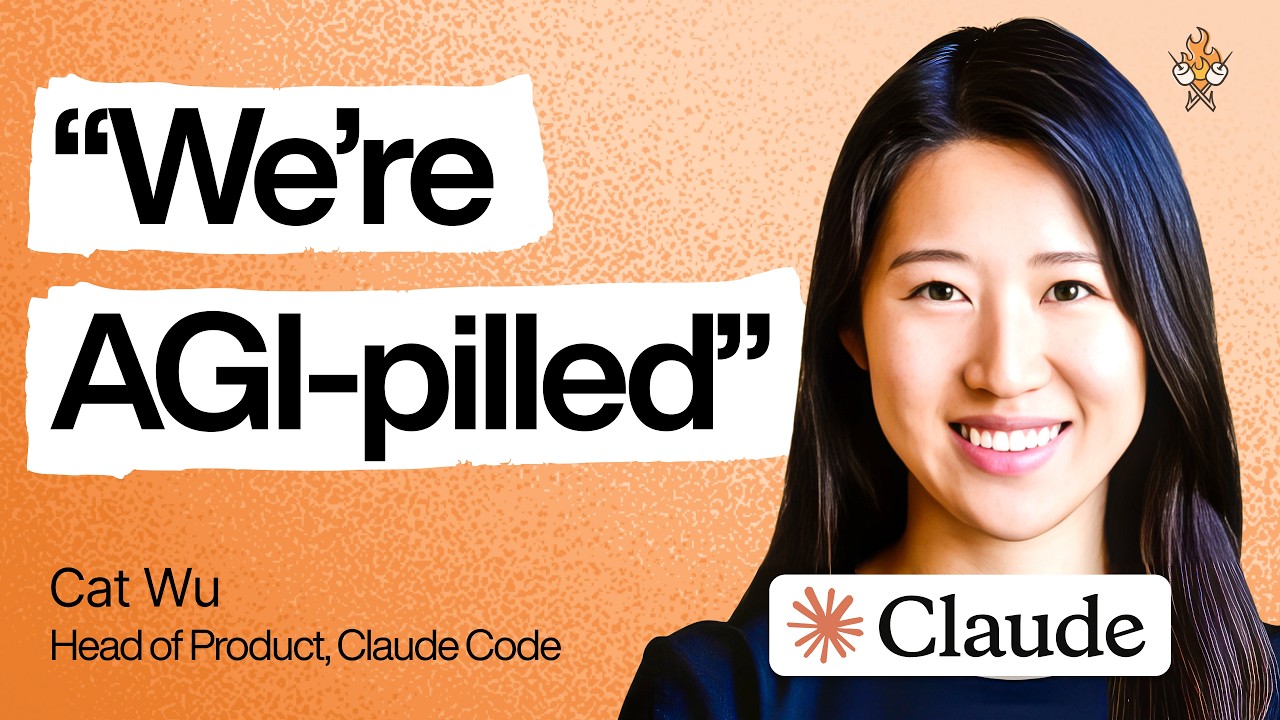
Source: "How Anthropic's product team moves faster than anyone else" — Cat Wu, Head of Product, Claude Code at Anthropic
Back to Blog